
When there’s geopolitical tension in the background, real estate starts to feel like a risk. And that shift has an upside, one because it makes us switch to a more rational mindset, and two, because it stress-tests the market. Who will stay and who will go? Which communities are more sensitive to market shifts, and which ones will stick together against all odds?
In February, Dubai saw a dip of “3–5%” due to the Middle Eastern conflict, but it started picking back up in “April” by “6–8%”.
Given the constant flux in the real estate climate, I’d look for a balance between capital appreciation and community stability.
Tight-knit communities are sturdier because people rely on them to live. Kids need to go to school, parents need to work, and for many, leaving permanently is not really an option. That means demand won’t disappear over the slightest tremor.
Highly speculative areas behave differently because liquidity there slows down when confidence drops.
So, if we were to focus on risk mitigation rather than just capital appreciation, I’d be looking at these factors:
- People living there full-time, not just investors
- Solid infrastructure that already supports a comfortable life, not just future plans
- Demand that comes from multiple sources (work, schools, lifestyle), not one narrative
- A lifestyle that doesn’t rely on perfect market conditions to function
In this blog, I’ll walk you through Dubai to show you how each community behaves in real life, not just how it’s marketed.
I don’t want to overwhelm you with options, so I’ll narrow it down to a few communities that genuinely feel livable. Then, you can wait for an entry that doesn’t feel rushed.
Dubai Creek Harbour
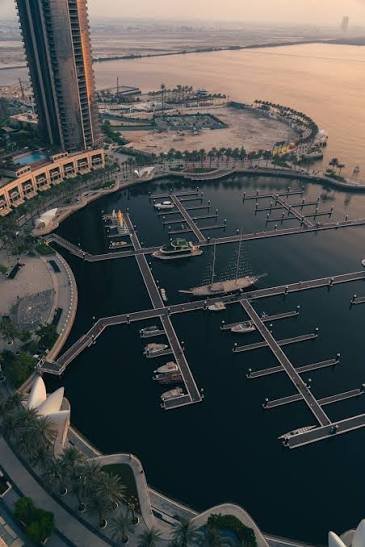
Dubai Creek Harbour is a good investment if you stop treating it like a postcard and start treating it like a city extension.
The investment logic here is “future gravity.” As Dubai expands, well-planned waterfront communities near central Dubai tend to absorb demand because they offer a blend of amenities tenants actually pay for. Views, promenades, and a newer building stock, but still within reasonable reach of Downtown and Business Bay.
On the lower end, you’re typically looking at studios and some one-bedroom units. Popular among achelors and young professionals who care more about location than space.
At higher price points, you land in multiple-bedroom layouts that can accommodate families.
But, apart from apartment size and budget, you should prioritize accessible areas and livable layouts.
Dubai Creek Harbour is known for its efficient master planning, with waterfront walkability and mixed-use retail that support daily life. That matters because it reduces dependence on the car for basic routines.
Tenants also care about usability. If the kitchen is cramped or the living area is awkward, the unit will sit, even in a good area.
Another question I hear is, “Should I care about hype?”
Maybe, if you’re willing to overpay for a marketing gift wrapper. The most sensible choice is a unit that would still rent well even if prices stayed flat for a while.
Creek Harbour can do that if you stick to buildings with solid access and walkable communities.
Dubai Hills Estate
Dubai Hills communities are some of my favourite for American investors because it gives that high-quality suburb feel, only Dubai style.
People with families, routines, and jobs tend to choose communities that reduce friction in daily life. It’s got schools nearby, parks, retail, and a general sense of order. That combination creates stickiness. When tenants are happy, they renew. When owners live there, they maintain units better. Both help maintain long-term value.
You can find good properties under 2m in specific pockets, but don’t let anyone sell you the cheapest deal while compromising building quality or access.
A smart approach is to ask, “Would I personally enjoy living here if I had to?”
And for Dubai Hills, the answer is usually yes. It just needs patience, good selection, and realistic expectations about entry points.
Dubai Islands

Dubai Islands is a different kind of bet. It’s less about today’s convenience and more about how Dubai builds new coastal nodes.
The logic: Dubai has a track record of creating destination waterfronts that eventually develop their own demand ecosystem. When that happens, early buyers can benefit, but only if they picked a product that remains relevant once the “brand new” feeling fades.
In other words, the question to ask is not “Will this be famous?” but “Is this an accessible community people would want to live in long term?”
That’s what makes all the difference. If your unit only works bullish seasons, you’re speculating. If it works in a stable market, you’re investing.
Dubai Islands can make sense for investors who are comfortable with development timelines and who don’t need immediate rental yield. The more time for the area to mature generally means more stability, but also more patience required from you.
Maritime City
I like Dubai Maritime City because it solves a problem many people don’t think about; you get easy access to some of Dubai’s busiest business districts without living right in the middle of them.
A perfect location for those who want the right balance between convenience and peace. It’s away from busy roads and the bustling business lifestyle. Its waterfront? Majestic.
Your selection matters a lot here because tenant demand is quality-sensitive. If the building finishes feel average, you might lose some people.
A good question to ask yourself is, “Who is my tenant?” In Maritime City, it is often professionals who care about the environment, not just price. That should influence your choice of layout, view, and building.
Mina Rashid
Mina Rashid feels like Dubai’s quieter waterfront story. Not trying to be the loudest destination, just trying to be livable.
The place blends heritage and waterfront in a way that can attract both residents and longer-stay visitors. Not purely a holiday destination, or a corporate hub either. Just the right balance that keeps different types of tenants coming back.
The “make sense” version of Mina Rashid is buying something that aligns with how people actually use waterfront communities: morning walks, marina views, easy cafes, and a sense of belonging.
Now, is it too far from the action?
A little… Mina Rashid sells you access to the city without actually living in it. It’s not going to feel like Downtown, but it’s a calm waterfront area that still connects well to key parts of Dubai.
Palm Jebel Ali

Palm Jebel Ali is the classic “long runway” play.
It has brand power because the Palm concept is globally recognized. But brand alone is not an investment thesis; it’s whether the area develops into a complete ecosystem with enough reasons to live there.
What matters here is less about current activity and more about the development timeline. You’re essentially buying into future infrastructure, future density, and future demand that hasn’t fully arrived yet, which means pricing is more sensitive to sentiment and execution than established communities.
Palm Jebel Ali fits investors who are comfortable with uncertainty and care less about near-term rental yield. The early bird might get the worm here; the sooner you buy, the more you profit if the plan succeeds, but the more time and ambiguity you must tolerate.
Emaar South
Emaar South is one of the most practical real estate choices in Dubai because it sits in a part of the city that is still forming its identity, while being tied to big infrastructure.
The investment logic is affordability plus master plan credibility. When a community is priced for real residents, not just investors, it can develop a more stable rental base over time. You may not get instant premium rents, but you can get a tenant pool that is sensitive to value and willing to stay.
Just like Mina Rashid, it could feel a little far from the action.
But distance shouldn’t be a deal-breaker. Emaar South appeals to people who work in nearby zones, people who prioritize space and want newer homes at a lower entry point.
If your target tenant works in DIFC and hates commuting, you’re mismatched. If your target tenant values a newer community and can commute, or works closer, the math starts to work.
You can find apartments under 1.5m and, in some cases, smaller-format units depending on market conditions. Your biggest edge here is buying something with a good layout that sells well.
Dubai Design District (D3)

D3 is the perfect “small budget, strong location” duo in Dubai.
The place demands attention from a specific professional crowd: design, media, startups, and people who like being close to Downtown without the Downtown pricing.
Districts targeting a specific audience tend to sell better because tenants feel like the place was built around them, not just for marketing hype.
If you fancy modern compact units built for efficiency, you’ll love D3. In lifestyle-centric districts, apartment quality and good building management really matterr. People want places that are well-maintained and where things get fixed quickly.
Now you might ask: “Is it too niche?”
It’s niche in the same way SoHo or a warehouse district is niche. Some people love it, and some people don’t care. As an investor, you don’t need everyone. You just need enough of the right tenants consistently. D3 can provide that, especially for investors who prefer centrality and character over sheer size.
A checklist you can use to mitigate risks
A checklist you can use to mitigate risks
Before you invest a single dirham, run these questions:
- Can I hold this for five years if I have to?
- If it drops 20%, will I still behave rationally?
- What is the simplest way this can go wrong?
- Will it require too much of my attention?
- If I need liquidity, what is the escape plan?
If you cannot answer these, you are not ready to buy the asset.
You are only ready to buy the story.
My closing opinion
In light of the recent events, the goal is not a quick win. The goal is to stay in the game.
That usually means owning a few sensible things that you understand, that resist market upheavals, and that don’t demand constant heroics.
Dubai taught me something valuable about money:
“A city can change fast, but markets can change faster.”
People can change their minds overnight and make you doubt all of your choices.
The one strength you get to keep is your risk tolerance.
Real estate investments reward patience, punish ego, and leave you with options.
But when outcomes are unpredictable, you can definitely build something solid that holds up, even when the ground beneath starts to shift.
